

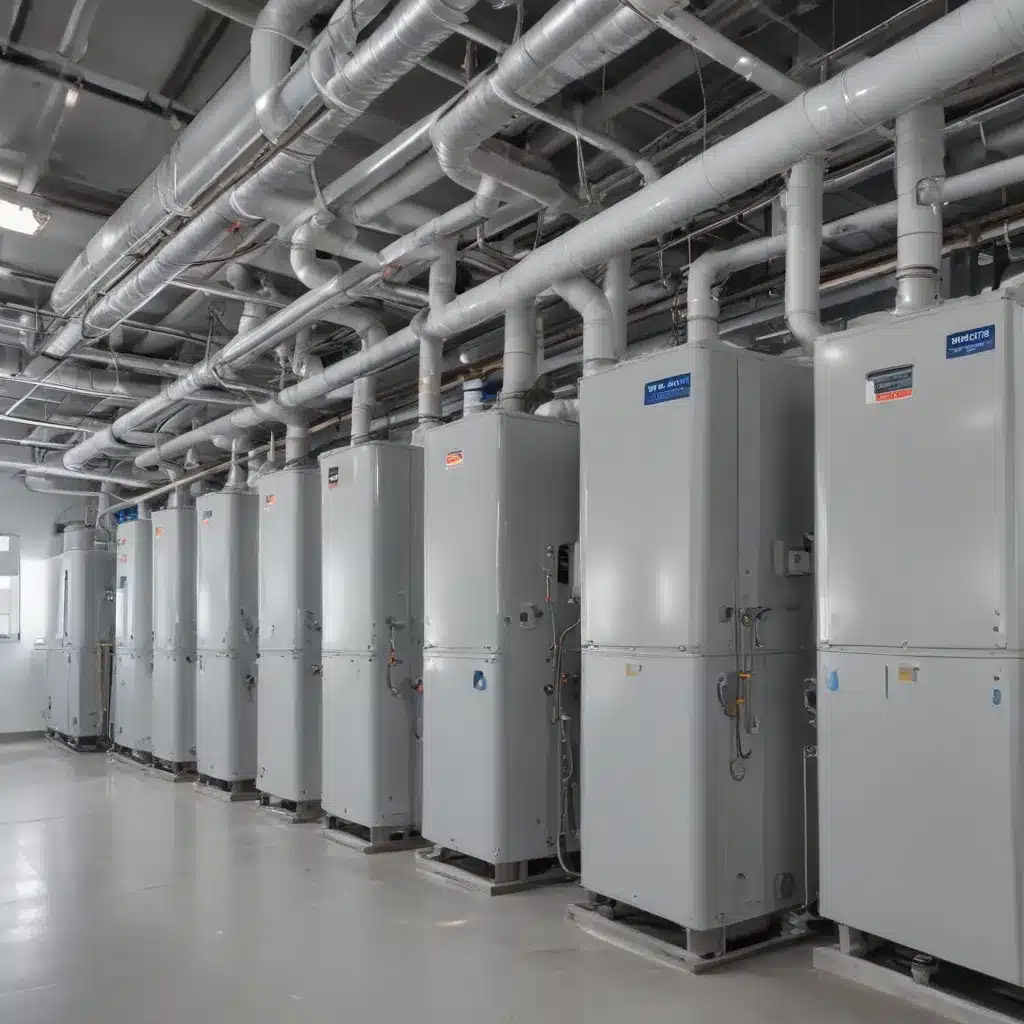
As an experienced HVAC specialist, I know that maintaining the safety and efficiency of commercial water systems is crucial for protecting building occupants and preventing the spread of harmful bacteria like Legionella. In our 10 years of HVAC service experience… Legionella is the bacteria responsible for Legionnaires’ disease, a severe and sometimes fatal form of pneumonia. Mitigating the risk of Legionella growth in HVAC water systems requires a multi-faceted approach targeting temperature, disinfection, hydraulics, and system materials.
Now, this might seem counterintuitive when dealing with air conditioning systems…
Preventative Maintenance Strategies
One of the most effective ways to control Legionella is through proper temperature management. Legionella thrives in warm water between 25°C and 43°C (77°F and 109°F), so maintaining hot water temperatures above 60°C (140°F) is crucial. This helps limit the bacteria’s growth potential throughout the entire water system. Regular inspection and maintenance of water heaters, circulation loops, and distal points (e.g., faucets, showerheads) ensures that hot water stays well above the Legionella growth range.
In addition to temperature control, disinfection plays a key role in Legionella mitigation. Oxidizing biocides like chlorine, chloramine, and chlorine dioxide can be effective at eliminating Legionella when applied at the right concentrations and contact times. However, the bacteria’s ability to thrive within biofilms and free-living amoebae means that disinfection alone is often not enough. Careful monitoring of disinfectant residuals throughout the system is essential to verify adequate coverage.
System Efficiency Optimization
Hydraulic management is another critical factor in controlling Legionella. Stagnant or low-flow conditions allow the bacteria to proliferate, so maintaining consistent water circulation and minimizing dead legs or other areas of poor flow is vital. Flushing the system on a regular schedule can help dislodge biofilms and deliver disinfectant to all areas.
The choice of piping materials in the HVAC system also influences Legionella growth. Certain materials like copper, stainless steel, and some plastics are less conducive to bacterial colonization compared to iron or galvanized steel. When renovating or installing new systems, selecting corrosion-resistant, anti-microbial materials can help create an unfavorable environment for Legionella.
Seasonal Preparation Techniques
Preparing HVAC water systems for seasonal changes is another important consideration. During warmer months, cooling towers and evaporative condensers require extra attention, as they generate aerosols that can transmit Legionella. Routine disinfection, drift eliminator maintenance, and careful location of air intakes are essential. Conversely, in colder weather, stagnation in domestic hot water systems increases the risk, necessitating extra flushing and temperature monitoring.
Cooling System Design and Installation
For the cooling side of HVAC systems, design and material selection are crucial. Cooling towers, evaporative condensers, and fluid coolers all use water to dissipate heat, creating an ideal environment for Legionella growth. Choosing corrosion-resistant components, maintaining proper water treatment, and implementing effective drift elimination can help mitigate the risk.
Energy-Efficient AC Technologies
As the industry continues to prioritize energy efficiency, new HVAC technologies like variable refrigerant flow (VRF) systems and geothermal heat pumps are becoming more common. While these innovations offer impressive energy savings, their impact on Legionella risk might want to be carefully considered. Proper system design, water treatment, and maintenance protocols are essential to prevent bacterial growth.
Boiler and Furnace Maintenance
On the heating side, ensuring that boilers and furnaces are well-maintained is crucial for Legionella control. Sediment buildup, scale formation, and inadequate water circulation in these systems can all contribute to bacterial proliferation. Regular cleaning, flushing, and water treatment are necessary to keep Legionella at bay.
Integrated Building Management
Taking a holistic, building-wide approach to HVAC system management is key to effective Legionella mitigation. Integrating temperature, disinfection, and hydraulic monitoring into a comprehensive building automation system allows for proactive detection and response to potential issues. Regular testing and documentation of water quality parameters are also essential for compliance and risk management.
Sustainability and Emissions
As the push for sustainable, low-emissions HVAC systems continues, it’s important to consider the impacts on Legionella control. Strategies like water conservation, alternative water sources, and reduced chemical usage can inadvertently create conditions favorable for bacterial growth. Careful system design and maintenance protocols are necessary to double-check that that energy-efficient HVAC systems do not compromise occupant safety.
Water Treatment and Disinfection
Effective disinfection is a cornerstone of Legionella mitigation, but the choice of treatment method might want to be carefully considered. Oxidizing biocides like chlorine, chloramine, and chlorine dioxide can be highly effective, but their performance is influenced by water chemistry, biofilm formation, and the presence of amoebae. Non-chemical approaches like UV light and copper-silver ionization offer alternative options, but their efficacy can also be impacted by system-specific factors.
System Monitoring and Verification
Continuous monitoring of HVAC water systems is essential for detecting and responding to Legionella growth. Regular culture-based testing, as well as advanced molecular techniques like quantitative PCR, can provide valuable insight into the presence and concentration of the bacteria. Thorough documentation of system parameters, maintenance activities, and test results is crucial for compliance and risk management.
Compliance and Regulatory Guidance
HVAC system operators might want to stay up-to-date on the latest regulatory requirements and industry guidelines for Legionella control. Organizations like the Centers for Disease Control and Prevention (CDC), the Occupational Safety and Health Administration (OSHA), and ASHRAE provide comprehensive guidance on water system management, disinfection, and outbreak response. Adhering to these standards is not only essential for protecting building occupants, but also for demonstrating due diligence in the event of a Legionnaires’ disease incident.
By implementing a comprehensive, multi-faceted approach to Legionella mitigation, HVAC professionals can help double-check that the safety and reliability of commercial water systems. From precise temperature management and effective disinfection to optimized hydraulics and thoughtful material selection, a proactive strategy is key to reducing the risk of Legionella-related illnesses. As the industry continues to evolve, staying informed on the latest technologies, regulations, and best practices will be crucial for US Air Contractors and our clients.
Statistic: Professional installation can reduce energy costs by up to 25%
