

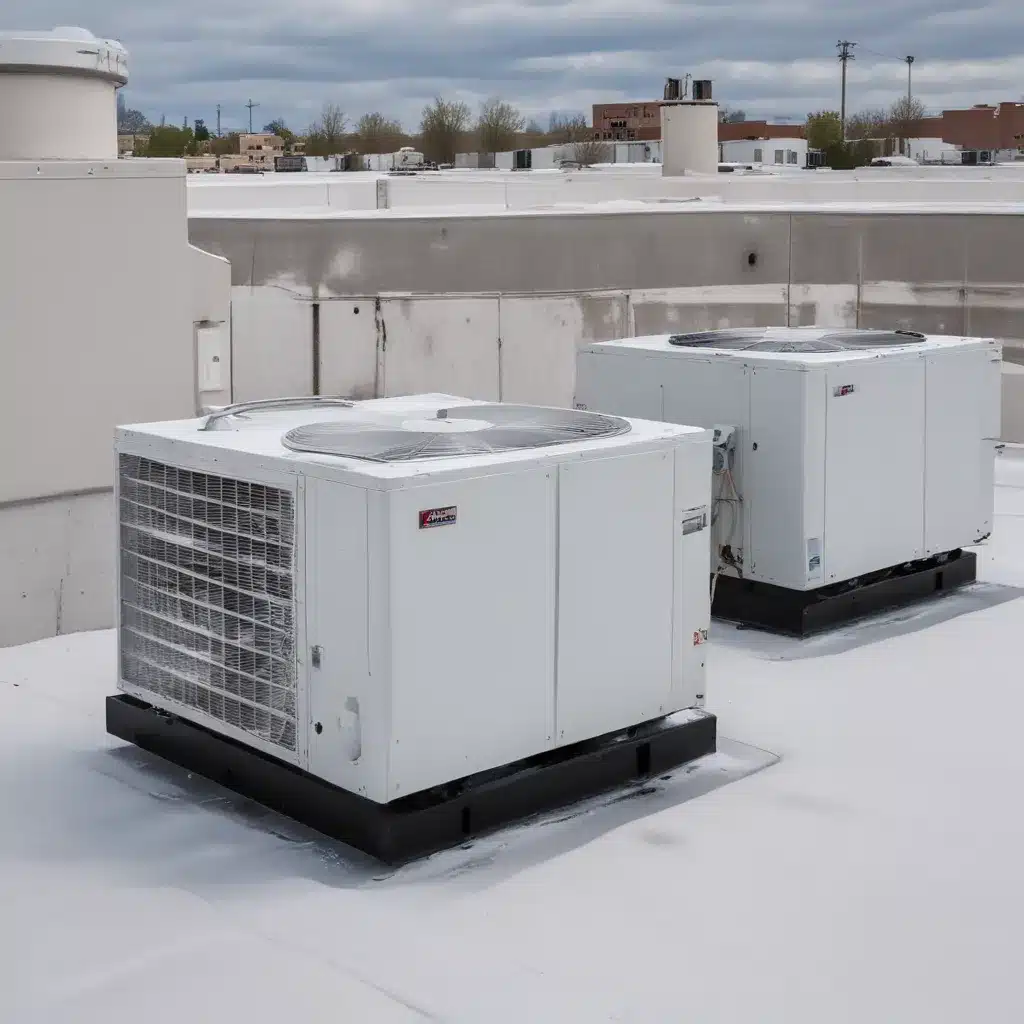
Improving Reliability and Resilience of Rooftop HVAC Units in Harsh Climates
As an experienced HVAC specialist, I understand the critical role that rooftop units play in maintaining comfortable indoor environments, especially in regions with extreme weather conditions. We learned this the hard way when dealing with complex HVAC issues… Whether you manage a commercial property, an industrial facility, or a government installation, ensuring the reliable and resilient performance of your rooftop HVAC units is essential for the well-being of your occupants and the overall efficiency of your operations.
In this comprehensive article, we’ll delve into the unique challenges posed by harsh climates, explore proven strategies for enhancing HVAC system reliability and resilience, and uncover the latest advancements in energy-efficient technologies that can help you optimize your building’s heating, cooling, and indoor air quality.
Rooftop HVAC Unit Considerations
Rooftop HVAC units are the workhorse of many commercial and industrial buildings, responsible for providing essential heating, cooling, and ventilation services. However, these units often face a myriad of challenges when installed in harsh climatic conditions, such as extreme temperatures, heavy precipitation, and high winds.
Harsh Climate Challenges
In regions with extreme heat, cold, or humidity, rooftop HVAC units might want to contend with environmental stressors that can significantly impact their performance and lifespan. Prolonged exposure to direct sunlight, for instance, can lead to accelerated degradation of critical components, while heavy snowfall or ice buildup can obstruct airflow and inhibit heat transfer. Additionally, the presence of airborne contaminants, such as dust, pollen, or saltwater, can compromise the efficiency and longevity of these systems.
Preventative Maintenance Strategies
To mitigate the effects of harsh climates, a proactive approach to HVAC maintenance is essential. Regular inspections, cleaning, and tune-ups can help double-check that that your rooftop units are operating at peak efficiency and minimize the risk of unexpected breakdowns. By addressing issues such as clogged filters, refrigerant leaks, or worn-out components in a timely manner, you can extend the lifespan of your HVAC systems and reduce the frequency of costly repairs.
Regulatory Requirements
In addition to the practical challenges posed by harsh climates, HVAC systems might want to also comply with a range of regulatory requirements, including energy efficiency standards, emissions regulations, and workplace safety guidelines. Staying up-to-date with these ever-evolving mandates can help you avoid potential fines or legal complications, while also contributing to the overall sustainability and resilience of your building’s operations.
Energy-Efficient HVAC Solutions
As energy costs continue to rise and the imperative to reduce greenhouse gas emissions intensifies, the demand for energy-efficient HVAC solutions has never been greater. By leveraging the latest advancements in system design, control technologies, and renewable energy integration, you can not only lower your operating expenses but also minimize your environmental impact.
System Efficiency Techniques
One of the most effective ways to boost the energy efficiency of your rooftop HVAC units is through the implementation of advanced system controls and monitoring technologies. Intelligent thermostats, for example, can automatically adjust temperature and humidity levels based on real-time occupancy data and weather forecasts, ensuring that conditioned air is only delivered when and where it’s needed. Likewise, variable-speed compressors and high-efficiency motors can optimize energy consumption by precisely matching the system’s output to the building’s cooling or heating demands.
Seasonal Preparation Methods
Preparing your HVAC systems for seasonal changes is another critical aspect of maintaining energy efficiency. Before the onset of extreme hot or cold weather, be sure to schedule comprehensive inspections, clean or replace air filters, and address any issues that may have arisen during the previous season. This proactive approach can help your rooftop units operate at their peak performance, reducing energy consumption and maintaining optimal comfort levels for your building’s occupants.
Renewable Energy Integration
To further enhance the sustainability and resilience of your HVAC systems, consider integrating renewable energy sources, such as solar photovoltaic panels or geothermal heat pumps. By leveraging these clean energy technologies, you can reduce your reliance on traditional fossil fuels, lower your carbon footprint, and potentially even generate excess electricity that can be fed back into the grid or stored for backup power during grid outages.
Indoor Air Quality Enhancement
Maintaining a healthy and comfortable indoor environment is not only essential for the well-being of your building’s occupants but also critical for supporting their productivity and overall satisfaction. By focusing on key aspects of indoor air quality (IAQ), you can double-check that that your rooftop HVAC units are delivering optimal performance and enhancing the overall livability of your spaces.
Ventilation and Filtration
Proper ventilation and filtration are crucial for maintaining IAQ, especially in buildings located in harsh climates where outdoor air quality may be compromised by pollutants, pollen, or airborne contaminants. High-efficiency particulate air (HEPA) filters and advanced air purification systems can effectively remove these unwanted elements, while demand-controlled ventilation strategies can adjust airflow to match occupancy levels and further improve energy efficiency.
Humidity Control
Regulating indoor humidity levels is another critical aspect of IAQ management, particularly in regions with high or fluctuating moisture content in the air. Dehumidifiers and advanced humidity control systems can help maintain the ideal balance of temperature and relative humidity, which not only enhances occupant comfort but also prevents the growth of mold, mildew, and other potential health hazards.
Occupant Comfort Optimization
By carefully monitoring and adjusting the temperature, humidity, and airflow within your building, you can double-check that that your rooftop HVAC units are delivering the optimal level of comfort for your occupants. This, in turn, can contribute to increased productivity, reduced absenteeism, and a greater sense of well-being among your building’s tenants or employees.
Modern HVAC Technologies
As the HVAC industry continues to evolve, a new generation of advanced technologies is emerging that can significantly enhance the reliability, efficiency, and resilience of rooftop HVAC units, even in the face of harsh climatic conditions.
Automated Monitoring and Diagnostics
Predictive maintenance solutions, enabled by sophisticated sensor networks and cloud-based analytics, can proactively identify potential issues with your rooftop HVAC units before they escalate into costly breakdowns. By continuously monitoring system performance, these technologies can alert you to developing problems, recommend preventative maintenance actions, and even automate certain repair or optimization tasks.
Smart Thermostat Integration
The integration of smart thermostats with your rooftop HVAC units can provide a wealth of benefits, from enhanced energy efficiency to improved occupant comfort. These intelligent control systems can learn and adapt to your building’s usage patterns, weather conditions, and energy prices, automatically adjusting temperature and humidity levels to optimize comfort and minimize operational costs.
Predictive Maintenance Capabilities
Advanced predictive maintenance technologies can also help you extend the lifespan of your rooftop HVAC units by anticipating potential failures and recommending proactive maintenance strategies. By analyzing sensor data, operational trends, and environmental factors, these systems can identify worn components, detect refrigerant leaks, and even forecast the remaining useful life of critical system elements, enabling you to plan for and address issues before they lead to unexpected downtime or costly repairs.
At US Air Contractors, we are committed to helping our clients achieve the highest levels of HVAC system reliability, energy efficiency, and indoor air quality, even in the face of harsh climatic conditions. By combining our extensive industry expertise with the latest technological advancements, we can work closely with you to design, install, and maintain rooftop HVAC solutions that deliver optimal performance, minimize your environmental impact, and enhance the overall well-being of your building’s occupants. Contact us today to learn more about our comprehensive HVAC services and how we can help you future-proof your facility.
Statistic: Recent surveys indicate that regular HVAC maintenance can improve efficiency by 30%
