

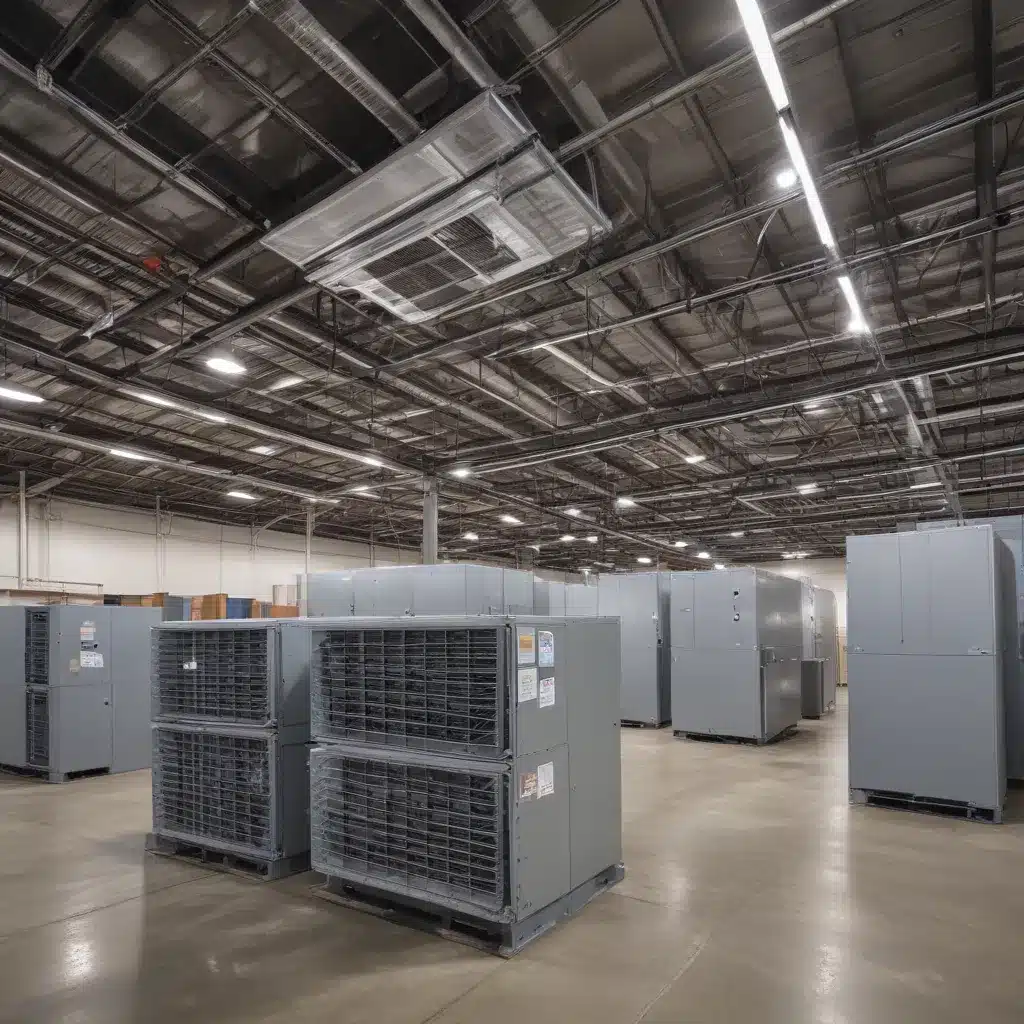
Implementing Demand-Based Ventilation for Improved Energy Efficiency in Warehouses
As an experienced HVAC specialist, I’ve seen the significant impact that demand-based ventilation can have on energy efficiency in commercial and industrial spaces, particularly warehouses. In our 10 years of HVAC service experience… In this comprehensive article, we’ll explore the benefits of implementing demand control ventilation (DCV) systems, the key components and technologies involved, and how you can optimize your warehouse’s climate control for maximum savings and comfort.
Now, this might seem counterintuitive when dealing with air conditioning systems…
Understanding Demand-Based Ventilation
Demand control ventilation (DCV) is an HVAC system design approach that dynamically adjusts the ventilation rate based on the actual occupancy and environmental conditions within a building. Unlike traditional fixed-rate ventilation, DCV systems continuously monitor factors like carbon dioxide (CO2) levels, temperature, and humidity, and automatically adjust the airflow to meet the changing needs of the space.
This targeted, demand-driven approach offers numerous benefits for warehouse operations:
Energy Efficiency: By only providing the necessary amount of ventilation, DCV systems can significantly reduce the energy consumption associated with heating, cooling, and air circulation. Studies have shown that DCV can deliver 15-25% reductions in total energy use and CO2 emissions compared to traditional ventilation methods.
Improved Indoor Air Quality: Proper ventilation is essential for maintaining a healthy, comfortable indoor environment. DCV systems can automatically increase fresh air intake when occupancy or pollutant levels rise, helping to dilute and remove contaminants like dust, fumes, and odors.
Occupant Comfort and Productivity: Warehouses with optimal temperature, humidity, and air circulation see improved worker comfort, reduced sick leave, and higher productivity. DCV helps maintain these ideal conditions by responding to changing needs.
Reduced Operating Costs: The energy savings from demand-based ventilation directly translate to lower utility bills and operating expenses for warehouse facilities. These cost reductions can then be reinvested into other efficiency upgrades or sustainability initiatives.
Key Components of a DCV System
A typical DCV system consists of two main elements:
- Occupancy and Environmental Sensors: These detect real-time conditions within the warehouse, including:
- Occupancy levels (using motion detectors, CO2 sensors, or people-counting cameras)
- Temperature and humidity
-
Air quality metrics like CO2, particulate matter, and volatile organic compounds (VOCs)
-
Central Control Unit: The sensor data is fed into a central controller that processes the information and dynamically adjusts the ventilation system accordingly. This may involve modulating fan speeds, opening/closing dampers, or triggering air handler units to provide the optimal airflow.
Some advanced DCV systems also integrate with building management systems (BMS) or utilize weather forecasting data to further refine their ventilation strategies based on anticipated occupancy and climate conditions.
Implementing Demand-Based Ventilation in Warehouses
Introducing a DCV system into an existing warehouse facility can be a straightforward process, even for older buildings. Here are the key steps:
-
Conduct an HVAC System Assessment: Work with an experienced HVAC contractor to evaluate your current heating, cooling, and ventilation setup. Identify any opportunities for improvement, such as outdated equipment, inefficient airflow, or areas of insufficient ventilation.
-
Design the DCV System: Based on the assessment, engineers can specify the appropriate sensors, control hardware, and ventilation adjustments needed to enable demand-based operation. This may involve upgrading or integrating with your existing HVAC infrastructure.
-
Install the DCV Components: With the system design in place, the physical installation of sensors, controllers, and any necessary ductwork or airflow modifications can commence. Careful planning and execution are essential to minimize disruptions to ongoing warehouse operations.
-
Configure and Calibrate the System: The DCV control software needs to be programmed with the appropriate settings and logic to optimize ventilation based on the unique characteristics of your warehouse. This includes establishing setpoints for factors like CO2, temperature, and humidity, as well as integration with any existing building management systems.
-
Train Staff and Implement Maintenance Protocols: double-check that that your warehouse staff understands how to monitor, adjust, and maintain the DCV system for optimal performance. Establish regular inspection, cleaning, and calibration routines to keep the sensors accurate and the ventilation responsive to changing conditions.
-
Continuously Monitor and Optimize: DCV systems are not “set and forget” solutions. Ongoing monitoring, data analysis, and fine-tuning of settings are essential to achieve the maximum energy savings and indoor air quality benefits over time. Leverage the system’s reporting capabilities to identify opportunities for further optimization.
Warehouse Efficiency Beyond DCV
While demand-based ventilation is a powerful tool for enhancing energy efficiency in warehouses, it’s just one component of a comprehensive HVAC strategy. Consider these additional measures to further improve your facility’s climate control and operational performance:
Zoned Climate Control: Divide your warehouse space into discrete climate zones, each with independent temperature, humidity, and ventilation control. This allows you to more precisely match the environmental needs of different work areas, storage requirements, and occupancy patterns.
Advanced Insulation and Airflow Management: Proper insulation, air sealing, and optimized airflow pathways can significantly reduce the thermal loads on your HVAC system, leading to greater efficiency and energy savings.
Predictive Maintenance and Monitoring: Embrace smart building technologies that provide real-time visibility into your HVAC system’s health and performance. This enables proactive maintenance, early problem detection, and data-driven optimization.
Renewable Energy Integration: Pairing your demand-based ventilation system with on-site renewable energy generation, such as solar photovoltaic panels, can further reduce your warehouse’s carbon footprint and utility costs.
By holistically addressing your warehouse’s climate control needs through a combination of DCV, zoned systems, advanced insulation, and modern HVAC technologies, you can achieve remarkable improvements in energy efficiency, occupant comfort, and operational sustainability.
For more information on how US Air Contractors can help you implement these strategies and unlock the full potential of your warehouse HVAC system, I encourage you to visit usaircontractors.com. Our team of experienced HVAC specialists is ready to partner with you and guide your facility towards a more efficient, comfortable, and environmentally responsible future.
Example: Addressing Common Heating System Problems 2023
