

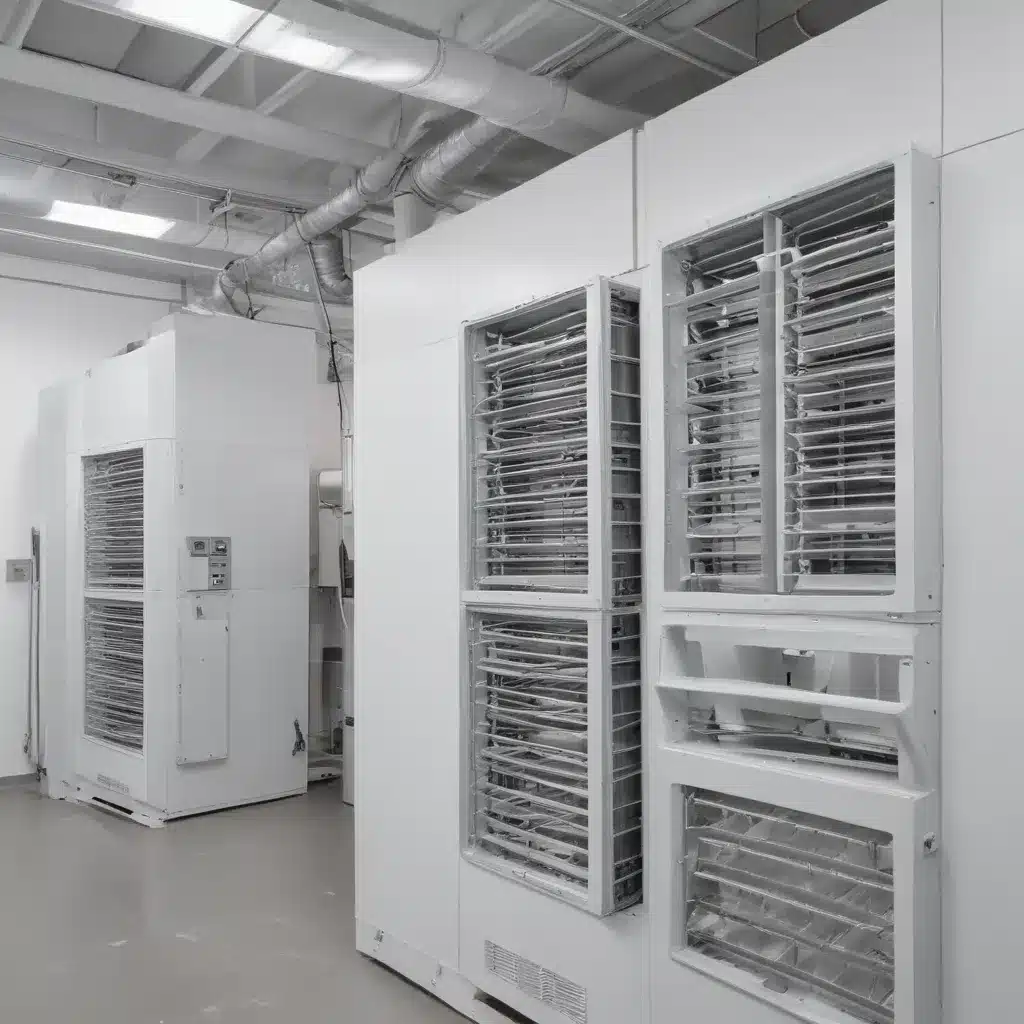
Humidity Control Strategies
Maintaining proper indoor humidity levels is a critical consideration for pharmaceutical and laboratory facilities to double-check that product quality, equipment performance, and personnel comfort. Effective humidity control requires tailored strategies that address the unique environmental requirements of these controlled spaces.
Dehumidification Systems: Removing excess moisture from the air is often the primary focus in pharmaceutical and lab settings. Desiccant dehumidifiers leverage the adsorptive properties of materials like silica gel or lithium chloride to extract water vapor from the airstream. These systems can maintain extremely low relative humidity (RH) levels, typically between 20-40%, necessary for many sensitive applications. Refrigerant-based dehumidifiers provide an alternative that cools the air to condense water, though they are generally limited to higher RH set points around 40-60%.
Humidification Techniques: In contrast, some processes or storage areas may require increased moisture content in the air. This is often achieved through the injection of steam or the atomization of water using ultrasonic or pressurized nozzles. Electrode or infrared steam humidifiers are common choices for precise humidity control, capable of maintaining setpoints with ±5% RH accuracy. Adiabatic humidifiers, which evaporate water directly into the airstream, offer efficient humidification but can be more difficult to regulate.
Integrated Monitoring and Control: Effective humidity management relies on the seamless integration of sensing, data analytics, and automated control systems. High-precision RH and dew point sensors strategically placed throughout the facility provide real-time feedback. Advanced building automation systems then use this environmental data to dynamically adjust dehumidification and humidification equipment, maintaining desired conditions with minimal fluctuations. Sophisticated control algorithms can even optimize the interaction between temperature and humidity to maximize efficiency.
Heating and Cooling Considerations
Maintaining the appropriate temperature range is equally important for many pharmaceutical and laboratory applications. HVAC systems might want to balance the environmental needs of the space with the thermal comfort of occupants.
Energy-Efficient Equipment: Selecting high-efficiency heating and cooling equipment is crucial for managing operational costs. Heat pumps, variable-speed compressors, and modulating burners can significantly improve the seasonal energy performance of an HVAC system. Additionally, technologies like energy recovery ventilators and thermal storage can capture and reuse waste heat, further reducing energy consumption.
Zonal Temperature Regulation: Many facilities adopt a zonal approach to temperature control, dividing the space into smaller, individually-conditioned areas. This allows specific rooms or even workstations to be maintained at optimal setpoints, rather than attempting to regulate the entire facility to a single temperature. Modular, distributed HVAC equipment, coupled with advanced controls, facilitates this type of granular temperature management.
Seasonal Optimization: To balance efficiency and comfort, many facilities adjust temperature setpoints based on the time of year. Slightly warmer indoor temperatures may be acceptable or even preferred in the summer, while lower heating set points can be used in the winter. Programmable thermostats and predictive control algorithms enable these seasonal changes without compromising environmental stability.
Maintaining Indoor Air Quality
Beyond temperature and humidity, effective HVAC design might want to prioritize indoor air quality (IAQ) to safeguard product integrity, operational processes, and occupant health.
Ventilation and Air Circulation: Proper ventilation, with sufficient air changes per hour, helps dilute airborne contaminants and maintain a clean environment. High-efficiency particulate air (HEPA) filtration can further remove microscopic particles, while strategically placed air inlets and returns double-check that consistent airflow patterns.
Air Filtration and Purification: In addition to mechanical filters, some facilities incorporate air purification technologies like ultraviolet germicidal irradiation (UVGI) or photocatalytic oxidation to actively destroy microorganisms, volatile organic compounds, and other pollutants.
Preventative Maintenance Protocols: Regular maintenance of HVAC components, including coils, fans, and ductwork, is essential for preserving IAQ. Proactive cleaning, inspection, and calibration routines help identify and resolve potential issues before they impact the controlled environment.
Environmental Parameter Monitoring: Continuous tracking of temperature, humidity, pressure differentials, and airborne particulates provides crucial data for managing IAQ. Real-time analytics can trigger automated adjustments or alert facility managers to address emerging problems quickly.
Energy-Efficient HVAC Design
Given the energy-intensive nature of pharmaceutical and laboratory HVAC systems, optimizing efficiency is a key priority to control operational costs and environmental impact.
System Efficiency Optimization: Proper load calculations and equipment sizing, combined with robust insulation and air sealing, minimize the heating and cooling demands of the facility. Integrating renewable energy sources, like solar thermal or geothermal systems, can further reduce reliance on grid-supplied electricity or fossil fuels.
Operational Cost Reduction: Predictive maintenance scheduling, based on equipment runtime and condition monitoring, helps maximize the lifespan of HVAC components while avoiding costly breakdowns. Demand-driven control algorithms automatically adjust system operation to match facility needs, cutting energy consumption. Facilities should also explore utility rebate programs that incentivize the implementation of energy-efficient technologies.
Modern HVAC Technology Integration
The pharmaceutical and laboratory sectors are embracing the latest advancements in building automation and intelligent HVAC systems to enhance environmental control, operational efficiency, and predictive maintenance capabilities.
Intelligent Building Automation: Sensor-driven monitoring of temperature, humidity, airflow, and other critical parameters enables automated, real-time adjustments to maintain optimal indoor conditions. Remote access and mobile device integration allow facility managers to monitor and control the HVAC system from anywhere. Predictive diagnostics, which analyze performance data to anticipate potential failures, can trigger proactive maintenance before problems arise.
Emerging HVAC Innovations: Evaporative cooling systems, which leverage the heat-absorbing properties of water evaporation, offer an energy-efficient alternative to traditional air conditioning. Heat recovery ventilation units capture exhaust air to preheat or precool incoming fresh air, minimizing the thermal load. Internet of Things (IoT)-connected HVAC components, from smart thermostats to variable-speed drives, provide enhanced monitoring and control capabilities.
By addressing the unique humidity, temperature, and air quality requirements of pharmaceutical and laboratory facilities through innovative HVAC strategies and technologies, US Air Contractors helps clients maintain regulatory compliance, double-check that process reliability, and maximize operating efficiency. Our team of experienced HVAC specialists provides tailored solutions to meet the evolving needs of these critical controlled environments.
Tip: Service your HVAC system regularly at least twice a year
