

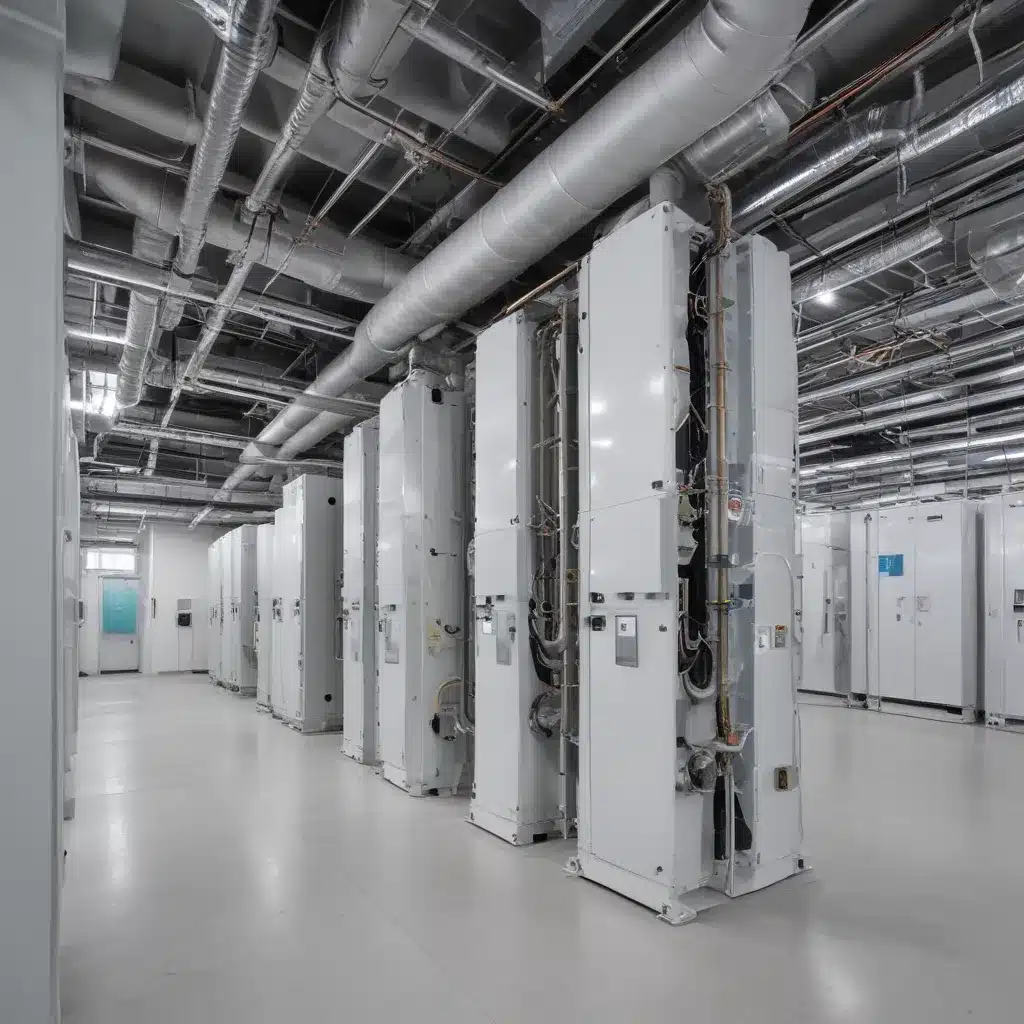
Variable Refrigerant Flow (VRF) systems have emerged as a game-changing solution for managing the heating, cooling, and ventilation needs of large commercial and institutional buildings. These advanced HVAC systems offer unparalleled energy efficiency, precise temperature control, and remarkable design flexibility – making them an increasingly popular choice for modern building owners and facility managers.
Principles of VRF Technology
At the core of VRF systems is the ability to dynamically adjust the flow of refrigerant to individual indoor units based on the specific heating and cooling demands of each zone. This “variable refrigerant flow” enables remarkable energy savings compared to traditional HVAC systems that operate at a constant capacity.
The key components of a VRF system include:
- Outdoor Unit: Houses the compressor, condenser coil, and other critical hardware that circulates the refrigerant.
- Indoor Units: Multiple wall-mounted, ceiling-recessed, or floor-standing units that deliver conditioned air to individual zones.
- Refrigerant Piping: The network of pipes that transports the refrigerant between the outdoor and indoor units.
- Control Systems: Sophisticated electronics that monitor and regulate the flow of refrigerant to match precise heating and cooling needs.
VRF systems can be configured as either heat pump (providing both heating and cooling) or heat recovery (able to simultaneously heat and cool different zones) models, depending on the specific requirements of the building.
Energy-Efficient Design Strategies
One of the primary benefits of VRF technology is its exceptional energy efficiency. By precisely matching the refrigerant flow to the heating and cooling needs of each zone, VRF systems minimize energy waste and reduce overall power consumption.
Key energy-saving strategies in VRF design include:
- Inverter-Driven Compressors: These variable-speed compressors adapt their output to match the exact load requirements, avoiding the energy-intensive on/off cycling of traditional systems.
- Heat Recovery Capabilities: Heat recovery VRF models can redistribute thermal energy from zones needing cooling to those requiring heating, further enhancing overall efficiency.
- Zonal Temperature Control: The ability to independently control the climate in different areas of the building allows for targeted, demand-based operation, reducing HVAC runtime and energy use.
The energy efficiency of VRF systems is often bolstered by utility rebates and tax incentives, making them a financially attractive option for large building owners and facility managers.
System Scalability and Zoning
One of the standout features of VRF technology is its remarkable scalability and zoning capabilities. VRF systems can be configured to serve buildings of various sizes, from small commercial spaces to massive institutional facilities, by connecting multiple outdoor units and coordinating numerous indoor units.
The zoning flexibility of VRF systems allows for independent temperature and airflow control in different areas of the building. This enables occupants to maintain their preferred comfort levels without compromising energy efficiency or wasting resources in unused spaces.
Key advantages of VRF zoning include:
- Personalized Comfort: Each indoor unit can be independently controlled, allowing occupants to set their ideal temperatures in individual zones.
- Improved Efficiency: Zones that are unoccupied or have lower heating/cooling demands can be scaled back, reducing overall energy consumption.
- Design Versatility: The modular nature of VRF systems simplifies the installation process and allows for seamless integration into new construction or retrofit projects.
By leveraging the scalability and zoning capabilities of VRF technology, facility managers can create versatile, energy-efficient HVAC solutions tailored to the unique needs of large commercial and institutional buildings.
Integrated Heating and Air Conditioning
VRF systems offer the ability to seamlessly integrate heating and cooling functions, providing year-round comfort and efficiency.
Heat Pump Integration:
VRF heat pump models can deliver both heating and cooling by reversing the refrigerant flow, enabling them to extract heat from the outdoor air and transfer it indoors during the winter months. This all-in-one functionality eliminates the need for separate heating and cooling equipment, streamlining installation and maintenance.
Thermal Load Balancing:
In heat recovery VRF systems, the ability to simultaneously heat and cool different zones allows for intelligent thermal load balancing. Excess heat from areas requiring cooling can be redirected to zones in need of heating, reducing the overall energy demand and enhancing efficiency.
Ventilation and Air Quality Management
Maintaining optimal indoor air quality is a critical consideration for large buildings, and VRF systems can play a key role in this endeavor.
Indoor Air Quality Monitoring:
Many VRF systems integrate advanced sensors and control systems that continuously monitor indoor air quality parameters, such as temperature, humidity, and carbon dioxide levels. This data can be used to trigger adjustments in ventilation and air circulation, ensuring a healthy and comfortable indoor environment.
Mechanical Ventilation Techniques:
VRF systems can be seamlessly integrated with dedicated outdoor air systems (DOAS) to provide a steady supply of fresh, filtered air throughout the building. This mechanical ventilation approach helps dilute indoor pollutants, improve air circulation, and maintain optimal indoor air quality.
Preventative Maintenance Practices
Proactive maintenance is essential for ensuring the long-term performance and efficiency of VRF systems. Facility managers should implement a comprehensive preventative maintenance program that includes:
Proactive System Inspections:
Regular inspections of VRF components, including the outdoor unit, indoor units, and refrigerant piping, can help identify potential issues before they escalate.
Predictive Diagnostics and Analytics:
Leveraging advanced monitoring and data analysis tools can enable predictive maintenance, allowing facility managers to anticipate and address equipment problems before they disrupt operations.
Scheduled Maintenance Protocols:
Establishing a routine maintenance schedule for tasks such as filter changes, coil cleaning, and system calibrations can help maintain optimal VRF system performance and efficiency.
Enhancing System Efficiency
Beyond the inherent energy-saving capabilities of VRF technology, facility managers can implement additional strategies to further optimize the efficiency of their HVAC systems.
Demand-Based Operation:
Utilizing advanced control systems and sensors, VRF systems can be programmed to operate based on real-time occupancy and thermal load data, ensuring that energy is only consumed when and where it is needed.
Intelligent Control Algorithms:
Sophisticated control algorithms can analyze historical data and weather patterns to anticipate heating and cooling demands, automatically adjusting the VRF system’s operation to maximize efficiency.
Waste Heat Recovery Systems:
Integrating waste heat recovery systems with VRF technology can enable the capture and repurposing of excess thermal energy, further reducing overall energy consumption and emissions.
Seasonal Preparation and Optimisation
Maintaining the optimal performance of a VRF system requires strategic adjustments to account for seasonal changes in heating and cooling demands.
Summer Cooling Strategies:
During the peak cooling season, facility managers should double-check that that VRF systems are properly charged with refrigerant, coils are clean, and airflow is unobstructed to maximize cooling efficiency and indoor comfort.
Winter Heating Approaches:
For the heating season, particular attention should be paid to maintaining the proper operation of heat pump functionality, managing defrost cycles, and optimizing airflow to effectively distribute warm air throughout the building.
Transitional Period Adjustments:
During shoulder seasons when heating and cooling needs fluctuate, facility managers should monitor VRF system performance and make adjustments to control settings, airflow, and refrigerant charge to double-check that seamless transitions between heating and cooling modes.
Modern HVAC Technology Integration
As the built environment continues to evolve, the integration of VRF systems with emerging HVAC technologies can further enhance efficiency, sustainability, and occupant comfort.
Internet of Things (IoT) Connectivity:
Connecting VRF systems to the Internet of Things enables remote monitoring, data-driven optimization, and predictive maintenance capabilities, empowering facility managers to make informed decisions and proactively address issues.
Building Management System (BMS) Integration:
Integrating VRF systems with a building’s central management system allows for centralized control, data aggregation, and holistic optimization of the entire HVAC ecosystem, leading to improved energy efficiency and occupant comfort.
Renewable Energy Integration:
Pairing VRF systems with on-site renewable energy generation, such as solar photovoltaic systems, can further enhance the sustainability and carbon footprint of large commercial and institutional buildings.
Regulatory Compliance and Sustainability
As environmental regulations and sustainability initiatives continue to evolve, VRF systems offer a path forward for large buildings to meet energy efficiency standards and improve their environmental impact.
Energy Efficiency Standards:
VRF systems are designed to exceed the stringent energy efficiency requirements set by organizations like ENERGY STAR, LEED, and ASHRAE, helping building owners and facility managers achieve their sustainability goals.
Environmental Impact Mitigation:
The inherent energy efficiency and ability to optimize thermal load balancing of VRF systems contribute to reduced greenhouse gas emissions and a smaller overall carbon footprint for large buildings.
Occupant Comfort and Wellbeing:
By providing precise temperature control, superior indoor air quality, and whisper-quiet operation, VRF systems can enhance the comfort, productivity, and overall wellbeing of building occupants.
As the demand for energy-efficient, flexible, and high-performance HVAC solutions continues to grow, Variable Refrigerant Flow (VRF) systems have emerged as a transformative technology for large commercial and institutional buildings. By optimizing the design, operation, and integration of VRF systems, facility managers can create comfortable, sustainable, and cost-effective environments that meet the evolving needs of modern building occupants. To learn more about how VRF technology can benefit your large building, visit usaircontractors.com.
Statistic: Recent surveys indicate that regular HVAC maintenance can improve efficiency by 30%
