

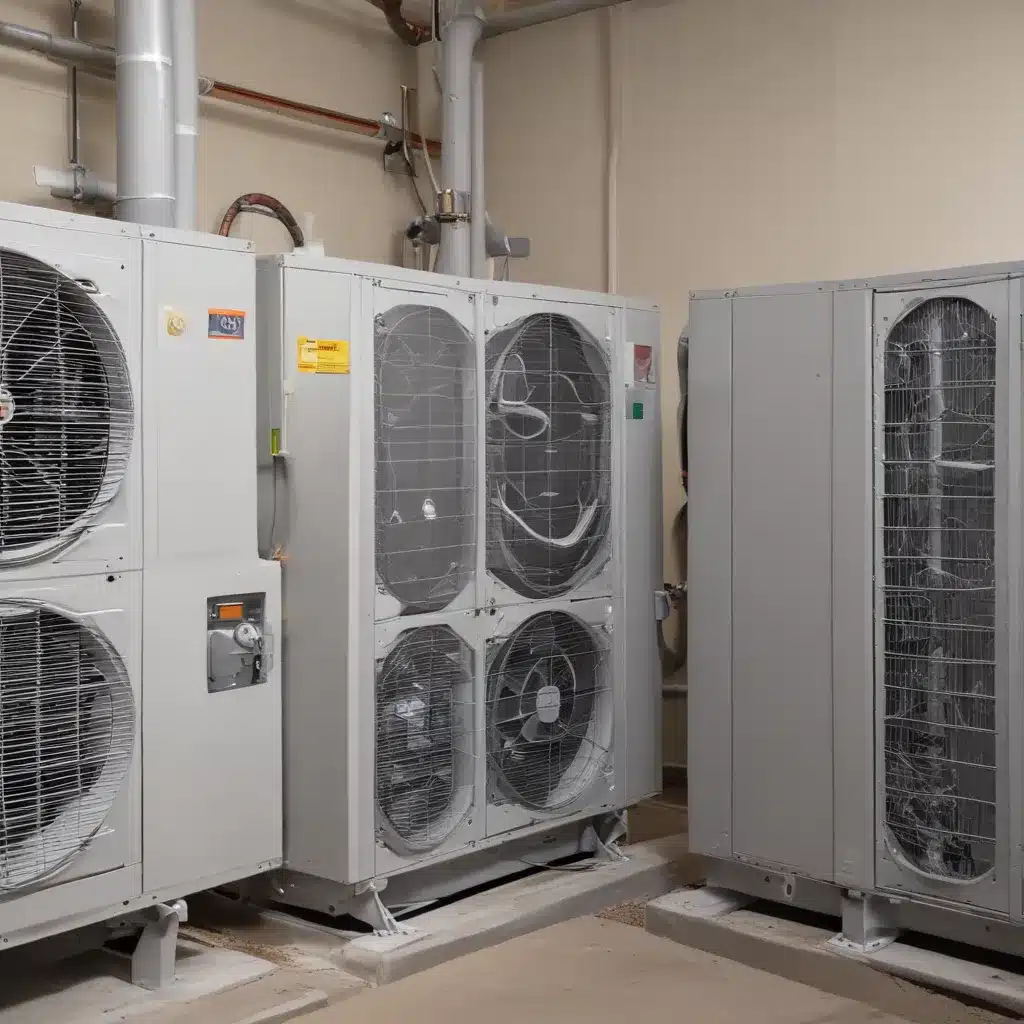
As an experienced HVAC specialist, I often encounter a common issue that can significantly impact the performance and efficiency of commercial heat pump systems – short-cycling. This occurs when the heat pump turns on and off rapidly, failing to complete a full heating or cooling cycle. Not only does short-cycling disrupt the desired indoor climate, but it can also lead to premature wear and tear on the equipment, higher energy bills, and even complete system failure if left unaddressed.
Now, this might seem counterintuitive when dealing with air conditioning systems…
In this comprehensive article, I will delve into the various causes of short-cycling in commercial heat pumps, provide diagnostic techniques, and offer effective solutions to help you maintain optimal system performance and energy efficiency.
Identifying Short-Cycling in Commercial Heat Pumps
Short-cycling is characterized by a heat pump turning on and off in rapid succession, typically within a matter of minutes. This can happen during both the heating and cooling modes, and it’s essential to recognize the signs early on to prevent further damage to the system.
Some telltale signs of short-cycling include:
- Frequent On/Off Cycles: If your heat pump is turning on and off multiple times per hour, it’s likely short-cycling.
- Inability to Reach Desired Temperature: The heat pump may struggle to maintain the set temperature, as it’s shutting off before the space can be adequately heated or cooled.
- Elevated Energy Bills: Short-cycling can significantly increase your energy consumption, as the heat pump is working harder but less efficiently.
- Unusual Noises: You may hear unusual sounds, such as banging, grinding, or rattling, coming from the heat pump during the short cycles.
If you notice any of these symptoms, it’s crucial to investigate the underlying cause and address the issue promptly to protect the longevity and performance of your commercial heat pump system.
Diagnosing the Causes of Short-Cycling
Short-cycling can be attributed to a variety of factors, ranging from simple maintenance issues to more complex system problems. Let’s explore some of the most common causes of short-cycling in commercial heat pumps:
1. Dirty or Clogged Air Filters
One of the most frequent culprits of short-cycling is a dirty or clogged air filter. When the filter becomes obstructed, it restricts airflow through the system, causing the heat pump to work harder to maintain the desired temperature. This can lead to the unit short-cycling as it attempts to compensate for the reduced airflow.
2. Refrigerant Leaks
Heat pumps rely on a precise amount of refrigerant to efficiently transfer heat. If there is a refrigerant leak in the system, it can cause the heat pump to short-cycle as the unit struggles to maintain the necessary pressure and temperature levels.
3. Oversized or Undersized Equipment
When a heat pump is not properly sized for the space it’s intended to serve, it can lead to short-cycling. An oversized unit will cool or heat the space too quickly, causing the heat pump to shut off before the cycle is complete. Conversely, an undersized unit may never be able to reach the desired temperature, resulting in constant on/off cycles.
4. Thermostat Malfunctions
Issues with the thermostat, such as incorrect calibration or a faulty sensor, can cause the heat pump to receive inaccurate temperature readings, leading to short-cycling as the system tries to compensate.
5. Electrical Problems
Electrical issues, such as faulty wiring, malfunctioning capacitors, or a problem with the compressor relay, can disrupt the normal operation of the heat pump, contributing to short-cycling.
6. Ductwork Problems
Leaks, blockages, or inadequate insulation in the ductwork can affect airflow and cause the heat pump to short-cycle as it struggles to maintain the desired temperature.
To accurately diagnose the root cause of short-cycling, it’s essential to have a qualified HVAC technician perform a thorough inspection of the entire system. They will be able to identify the specific issue and recommend the appropriate course of action to resolve the problem.
Resolving Short-Cycling in Commercial Heat Pumps
Once the underlying cause of short-cycling has been identified, there are several steps that can be taken to resolve the issue and restore optimal heat pump performance.
1. Air Filter Maintenance
Regularly cleaning or replacing the air filters is a simple yet effective way to improve airflow and prevent short-cycling. Aim to change the filters every 1-3 months, depending on the level of usage and environmental conditions.
2. Refrigerant Recharge and Leak Repair
If a refrigerant leak is detected, the system will need to be repaired and the refrigerant levels restored to the manufacturer’s specifications. An HVAC technician will use specialized equipment to locate and fix any leaks, then properly recharge the system.
3. System Sizing and Replacement
If the heat pump is found to be improperly sized for the building, the best solution may be to replace the unit with one that is appropriately sized. This may require a more detailed load calculation and system design to double-check that the new equipment can efficiently meet the heating and cooling demands of the space.
4. Thermostat Calibration or Replacement
Ensuring the thermostat is properly calibrated and functioning correctly is crucial. If the thermostat is malfunctioning, it may need to be recalibrated or, in some cases, replaced with a newer, more reliable model.
5. Electrical Repairs
Any electrical issues, such as faulty wiring or malfunctioning components, will need to be addressed by a qualified HVAC technician. They will be able to diagnose the problem and make the necessary repairs to restore proper electrical operation.
6. Ductwork Improvements
Sealing any leaks in the ductwork and ensuring proper insulation can help improve airflow and reduce the likelihood of short-cycling. In some cases, ductwork modifications or upgrades may be necessary to optimize the system’s performance.
By addressing the specific cause of short-cycling in your commercial heat pump, you can not only resolve the immediate issue but also improve the overall efficiency and longevity of the system. Regular maintenance and proactive system upgrades can further enhance the performance and energy savings of your heat pump.
At US Air Contractors, we understand the importance of maintaining optimal heat pump operation in commercial settings. Our team of experienced HVAC specialists is dedicated to providing comprehensive solutions to diagnose and resolve short-cycling, ensuring your buildings remain comfortable and energy-efficient all year round. Contact us today to learn more about our commercial HVAC services and how we can help you maintain a healthy, well-functioning heat pump system.
Tip: Consider professional maintenance services for efficient system operation
