

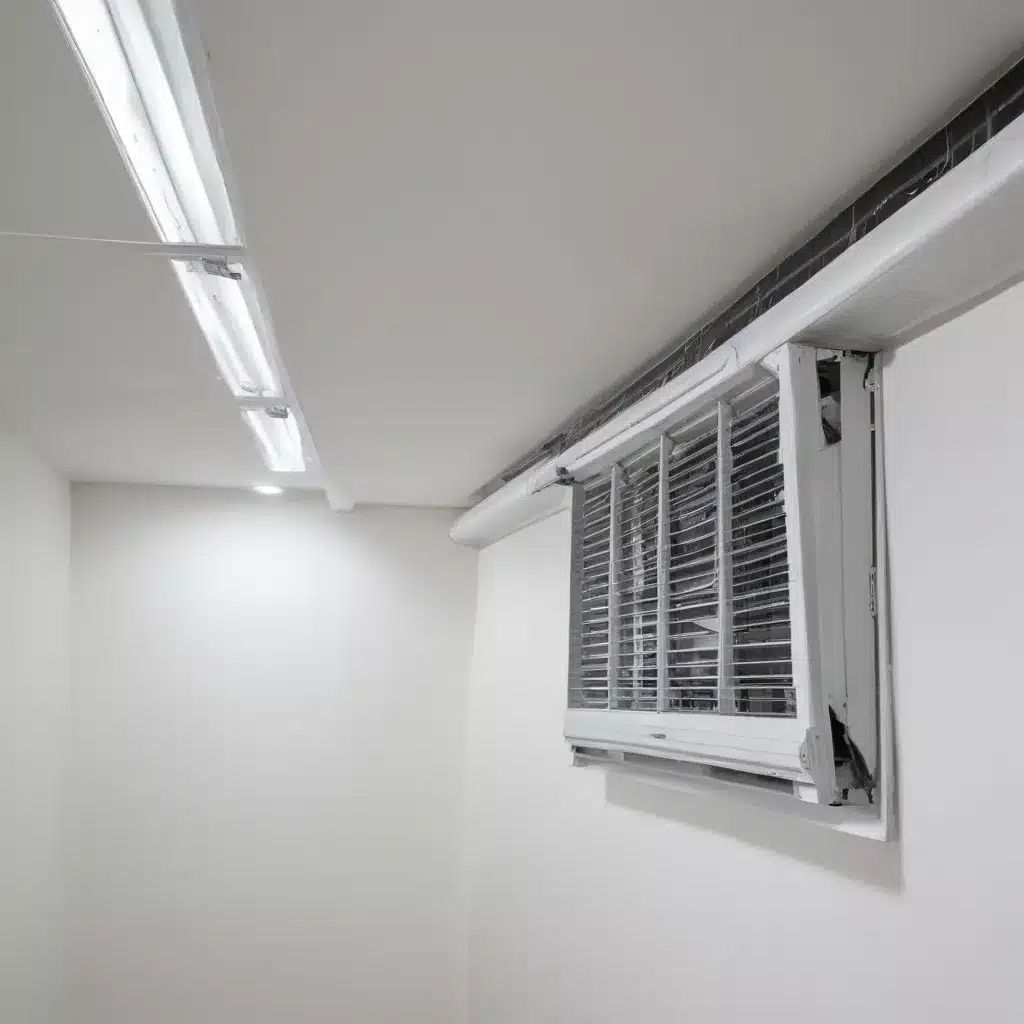
As an experienced HVAC specialist, I’m excited to discuss the importance of optimizing ventilation to enhance indoor air quality (IAQ) for US Air Contractors’ clients. We learned this the hard way when dealing with complex HVAC issues… In this comprehensive article, we’ll explore strategies to create healthier, more comfortable, and more energy-efficient living and working environments.
Now, this might seem counterintuitive when dealing with air conditioning systems…
Ventilation’s Role in IAQ
Proper ventilation is a fundamental aspect of maintaining excellent indoor air quality. By introducing fresh outdoor air into a building and removing stale, contaminated air, ventilation helps dilute and remove airborne pollutants, regulate temperature and humidity, and double-check that occupants have access to clean, breathable air.
However, many traditional HVAC systems rely heavily on infiltration and natural ventilation, which can be inconsistent and difficult to control. This can lead to a range of IAQ issues, from elevated CO2 levels and accumulation of volatile organic compounds (VOCs) to the spread of airborne illnesses.
To combat these challenges, building owners and facility managers are increasingly turning to advanced ventilation strategies that provide precise control over airflow, filtration, and air exchange rates. By optimizing ventilation, you can not only improve indoor air quality but also enhance energy efficiency and occupant comfort.
The Clean First Framework
One innovative approach to achieving sustainable IAQ is the Clean First framework, which emphasizes a layered, system-level strategy. This framework involves four key steps:
Step 1: Define IAQ Goals
The first step is to establish clear, measurable IAQ targets for your building or facility. This could include maintaining CO2 levels below 800 ppm, limiting particulate matter (PM2.5) to under 15 μg/m3, and reducing volatile organic compound (VOC) concentrations. These goals should be informed by industry standards, occupant needs, and potential health and productivity impacts.
Step 2: Clean Indoor Air
Next, focus on cleaning the indoor air through a combination of filtration, air purification, and pollution source control. This may involve upgrading HVAC air filters, installing in-duct UV-C lights to inactivate microbes, and addressing the root causes of indoor air pollutants, such as off-gassing from building materials or the presence of mold.
Step 3: Optimize Ventilation
With a clean indoor air foundation in place, you can then optimize the ventilation system to efficiently deliver the necessary outdoor air for dilution and air exchange. This may involve strategies like demand-controlled ventilation, which adjusts airflow based on real-time monitoring of occupancy and IAQ levels.
Step 4: Validate, Monitor & Control
The final step is to continuously validate, monitor, and control the IAQ performance of your building. This can be achieved through the integration of advanced sensors, building automation systems, and data analytics to double-check that your IAQ goals are consistently met in the most energy-efficient manner possible.
By following this Clean First approach, you can create a comprehensive, high-performing IAQ strategy that aligns with your building’s unique needs and characteristics.
Ventilation Strategies for Improved IAQ
Let’s explore some specific ventilation strategies and techniques that can help you optimize indoor air quality:
Demand-Controlled Ventilation (DCV)
Demand-controlled ventilation is a highly effective approach for managing ventilation rates based on actual occupancy and IAQ levels. By using CO2 sensors to monitor indoor conditions, a DCV system can automatically adjust the outdoor air supply to maintain optimal IAQ without wasting energy on unnecessary ventilation.
Studies have shown that DCV can reduce ventilation energy consumption by 20-60% compared to traditional constant-volume systems, while still ensuring compliance with ASHRAE Standard 62.1 and other IAQ guidelines.
Personalized Ventilation
Another innovative strategy is personalized ventilation, which delivers customized airflow and air quality to each individual occupant rather than relying on a one-size-fits-all approach. By placing air supply diffusers closer to the occupant’s breathing zone, personalized ventilation can improve thermal comfort, reduce exposure to pollutants, and enhance productivity.
Displacement Ventilation
Displacement ventilation is a specialized air distribution method that leverages the natural buoyancy of warm air to create a vertical temperature gradient within a space. This approach introduces cool, fresh air at the floor level and allows warmer, contaminated air to rise and be exhausted near the ceiling. Displacement ventilation can be highly effective at maintaining IAQ while reducing energy consumption compared to traditional mixed-air systems.
Heat Recovery Ventilation
To boost the energy efficiency of ventilation, heat recovery ventilation (HRV) or energy recovery ventilation (ERV) systems can be employed. These technologies use a heat exchanger to capture the thermal energy from the exhaust air and transfer it to the incoming fresh air, reducing the heating or cooling load required to condition the ventilation air.
HRV and ERV systems are particularly useful in cold climates, where they can significantly reduce the energy required to heat ventilation air during the winter months.
Natural Ventilation
While mechanical ventilation systems provide the most control over airflow and IAQ, natural ventilation strategies can also play a valuable role, especially in milder climates or when outdoor air quality is favorable. By strategically opening windows, doors, and using fans, natural ventilation can help dilute indoor pollutants, regulate temperature, and improve occupant comfort.
However, it’s important to carefully evaluate the outdoor air quality and potential pollutant sources before relying on natural ventilation, as it can also introduce unwanted contaminants into the building.
Integrating Ventilation with Other IAQ Strategies
Optimizing ventilation is just one piece of the puzzle when it comes to achieving sustainable indoor air quality. To create a truly comprehensive IAQ solution, it’s important to integrate ventilation strategies with other key elements, such as:
Air Filtration and Purification
High-efficiency air filters, air purifiers, and other filtration technologies can work in tandem with ventilation to remove a wide range of airborne particulates, gases, and microorganisms. By pairing ventilation with advanced filtration, you can double-check that that the incoming fresh air is thoroughly cleaned before being distributed throughout the building.
Humidity Control
Maintaining appropriate indoor humidity levels is crucial for occupant comfort, as well as for preventing the growth of mold, mildew, and other microorganisms. Ventilation systems can be integrated with dehumidification or humidification equipment to actively manage the indoor moisture content.
Pollutant Source Control
Addressing the root causes of indoor air pollution, such as off-gassing from building materials, the presence of mold, or the use of harsh cleaning products, is a critical component of any IAQ improvement strategy. By controlling pollutant sources, you can minimize the need for extensive ventilation and filtration.
Monitoring and Optimizing IAQ
To double-check that the long-term success of your ventilation and IAQ strategies, it’s essential to implement a comprehensive monitoring and control system. This may include a network of sensors, data analytics, and building automation capabilities to continuously track key IAQ metrics, such as:
- Carbon dioxide (CO2) levels
- Particulate matter (PM2.5, PM10)
- Volatile organic compounds (VOCs)
- Temperature and humidity
By collecting and analyzing this data, you can fine-tune your ventilation system, make adjustments to air filtration, and optimize energy consumption – all while maintaining a healthy, comfortable indoor environment for occupants.
Conclusion
Optimizing ventilation is a crucial step in creating sustainable, high-performance indoor environments. By following a Clean First framework that prioritizes air cleaning, ventilation optimization, and continuous monitoring, you can significantly improve indoor air quality, enhance occupant comfort and health, and achieve greater energy efficiency.
As an experienced HVAC specialist, I encourage you to explore the various ventilation strategies and integrated IAQ solutions discussed in this article. By working with US Air Contractors, you can develop a tailored approach that addresses the unique needs of your building or facility and set a new standard for indoor air quality. Together, let’s unlock the full potential of your HVAC system and create healthier, more comfortable, and more energy-efficient spaces.
Tip: Replace air filters monthly to maintain optimal air quality
