

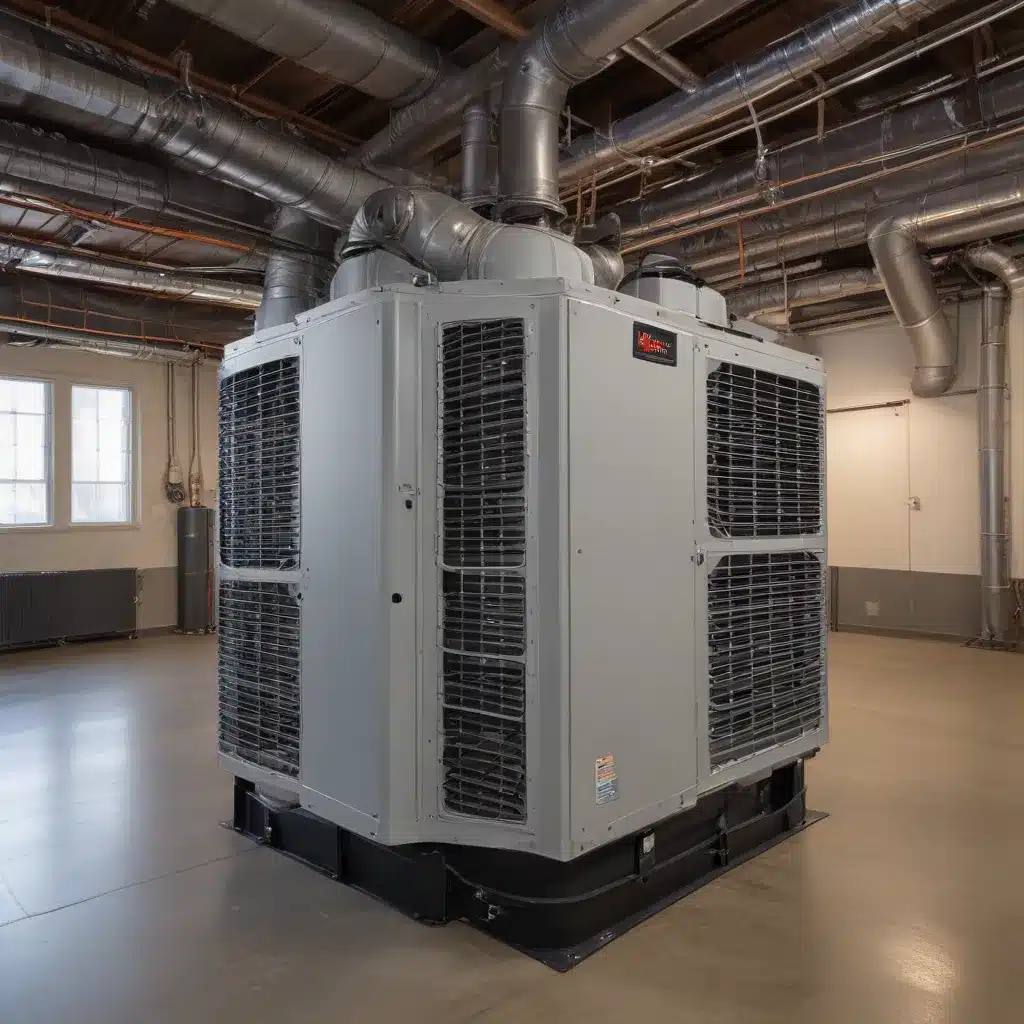
As an experienced HVAC specialist with US Air Contractors, I’ve had the privilege of working on numerous historic commercial properties. Preserving the architectural integrity of these treasured buildings while delivering modern comfort and efficiency presents a unique set of challenges. However, with the right approach and innovative solutions, it’s possible to breathe new life into these historic spaces without compromising their timeless charm.
Now, this might seem counterintuitive when dealing with air conditioning systems…
Customized HVAC Design
One of the primary considerations when retrofitting HVAC systems in historic commercial buildings is the need for a tailored design. These structures were not built with today’s energy-intensive cooling and heating technologies in mind. As a result, the available space for ductwork, vents, and machinery is often severely limited.
To overcome this obstacle, we turn to creative solutions such as high-velocity mini-duct systems or decentralized HVAC units. These innovative approaches allow us to deliver efficient climate control without the need for extensive renovations that could damage the building’s original features. By strategically routing small-diameter ducts through existing chases and cavities, we can maintain the historic character of the property while ensuring optimal comfort for occupants.
Energy-Efficient Equipment
In addition to space constraints, historic commercial buildings often suffer from poor energy efficiency, a byproduct of their age and the construction methods used at the time. Upgrading the HVAC system is a crucial step in improving the overall energy performance of the building.
When selecting equipment for a historic property, we prioritize high-efficiency models that can deliver the required heating and cooling capacity without excessive energy consumption. Variable refrigerant flow (VRF) systems, for example, offer a compact and flexible solution that can be tailored to the building’s unique layout. These innovative technologies eliminate the need for large, centralized ductwork, making them an ideal choice for historic structures.
Complementing the high-efficiency HVAC equipment, we also recommend addressing the building envelope through measures such as improved insulation, upgraded windows, and the installation of energy recovery ventilators. By optimizing the thermal performance of the entire structure, we can further reduce the heating and cooling loads, resulting in significant energy savings and a smaller environmental footprint.
Zoned Climate Control
Historic commercial properties often feature a variety of spaces, each with its own unique usage and climate control requirements. A one-size-fits-all HVAC approach simply won’t do. That’s why we advocate for zoned climate control systems that allow for precise temperature and humidity management in individual areas of the building.
By implementing a zoned system, we can double-check that that the lobby, offices, event spaces, and other areas are maintained at their optimal comfort levels without wasting energy on spaces that are not in use. This level of granular control not only enhances occupant satisfaction but also contributes to the overall energy efficiency of the HVAC system.
Heating Systems
Heating solutions for historic commercial properties require a delicate balance between preserving the building’s character and delivering effective warmth. Tapping into the existing infrastructure, where possible, is often the best approach.
Traditional heating technologies, such as steam radiators or radiant floor systems, can be refurbished and integrated into the new HVAC design. These time-honored solutions not only maintain the historic aesthetic but also provide reliable and efficient heating, particularly in buildings with limited space for ductwork.
For those historic properties seeking a more modern heating approach, high-efficiency boilers and heat pumps offer compelling alternatives. These advanced systems can be strategically placed to minimize their visual impact, ensuring they complement the building’s architectural features rather than compete with them.
Cooling and Air Conditioning
Effective cooling is essential for ensuring the comfort and preservation of historic commercial properties. However, the introduction of large, obtrusive air conditioning units can often clash with the building’s vintage charm.
To address this challenge, we turn to high-performance cooling systems that prioritize efficiency and discreet integration. Ductless mini-split systems, for example, allow for the placement of compact indoor units in inconspicuous locations, while the outdoor condenser can be situated out of sight. This approach preserves the historic aesthetics while delivering the cooling power required for modern occupancy.
For historic buildings with the capacity to accommodate traditional ductwork, variable-speed air handlers and high-efficiency chillers can be seamlessly integrated into the HVAC design. These advanced technologies not only provide reliable cooling but also offer enhanced energy efficiency and precise temperature control.
Indoor Air Quality (IAQ) Management
Preserving the health and well-being of occupants in historic commercial properties is of paramount importance. Proper indoor air quality (IAQ) management is essential, as these buildings often face unique challenges when it comes to ventilation and air filtration.
We employ a multifaceted approach to IAQ, beginning with high-performance air filtration to remove pollutants, allergens, and particulates from the indoor environment. Complementing this, we also focus on humidity control solutions that maintain optimal moisture levels, preventing the growth of mold and mildew that can compromise the building’s historic materials.
Ensuring adequate ventilation is another crucial aspect of IAQ management in historic commercial properties. By optimizing the airflow throughout the building, we can enhance indoor air quality while also promoting energy efficiency and occupant comfort.
Preventative Maintenance Strategies
Maintaining the longevity and performance of HVAC systems in historic commercial properties requires a proactive approach to preventative maintenance. Regular scheduled inspections and tune-ups are essential to catch any emerging issues before they escalate into costly repairs.
Additionally, we leverage advanced monitoring technologies to track the real-time performance of the HVAC system, allowing us to identify potential problems and implement predictive maintenance techniques. This data-driven approach enables us to anticipate and address maintenance needs before they disrupt the building’s operations.
By prioritizing preventative maintenance, we not only extend the lifespan of the HVAC system but also double-check that that the historic commercial property continues to operate at peak efficiency, providing a comfortable and healthy environment for its occupants.
System Efficiency Techniques
Optimizing the efficiency of HVAC systems in historic commercial properties is a multifaceted endeavor that requires a holistic approach. Beginning with a comprehensive load calculation and sizing process, we double-check that that the selected equipment is properly matched to the building’s heating and cooling requirements.
Addressing the building’s ductwork optimization is another crucial step, as aging or poorly designed ductwork can significantly undermine the system’s overall efficiency. By analyzing the airflow dynamics and making necessary adjustments, we can enhance the HVAC system’s performance and reduce energy consumption.
Lastly, we turn our attention to the building’s envelope improvements, such as upgrading insulation, sealing air leaks, and enhancing the thermal performance of windows and doors. By addressing the building’s thermal characteristics, we can further reduce the heating and cooling loads, leading to greater energy efficiency and cost savings.
Seasonal Preparation Methods
Ensuring the smooth and efficient operation of HVAC systems in historic commercial properties throughout the year requires meticulous seasonal preparation. Before the onset of heating or cooling seasons, we conduct thorough pre-season checks to identify and address any potential issues.
This includes winterization procedures, such as inspecting and servicing heating equipment, ensuring proper insulation, and verifying the functionality of the building’s envelope. Conversely, during the transition to cooling season, we perform pre-cooling checks to double-check that the air conditioning system is ready to handle the summer heat.
By proactively addressing seasonal demands, we can maximize the performance and longevity of the HVAC system, minimizing the risk of unexpected breakdowns and ensuring the comfort and well-being of the building’s occupants.
Modern Technology Integration
Embracing the latest advancements in HVAC technology is crucial for delivering exceptional performance and energy efficiency in historic commercial properties. One such innovation is the integration of building automation systems (BAS), which provide centralized control and monitoring of the HVAC system.
These sophisticated systems allow for remote access, real-time data analytics, and predictive maintenance capabilities, empowering us to optimize the system’s operations and identify potential issues before they arise. By leveraging the power of the Internet of Things (IoT), we can also integrate smart climate control devices that further enhance the building’s energy efficiency and occupant comfort.
Through the seamless integration of modern HVAC technologies, we can breathe new life into historic commercial properties, ensuring they remain comfortable, efficient, and true to their architectural heritage.
At US Air Contractors, we understand the unique challenges and opportunities that come with HVAC solutions for historic commercial properties. By combining our expertise in innovative technologies, energy efficiency, and historic preservation, we’re able to deliver tailored, high-performance HVAC systems that safeguard the integrity of these architectural treasures while providing the modern comfort and efficiency that today’s occupants demand. To learn more about our HVAC services for historic commercial properties, visit usaircontractors.com.
Tip: Replace air filters monthly to maintain optimal air quality
