

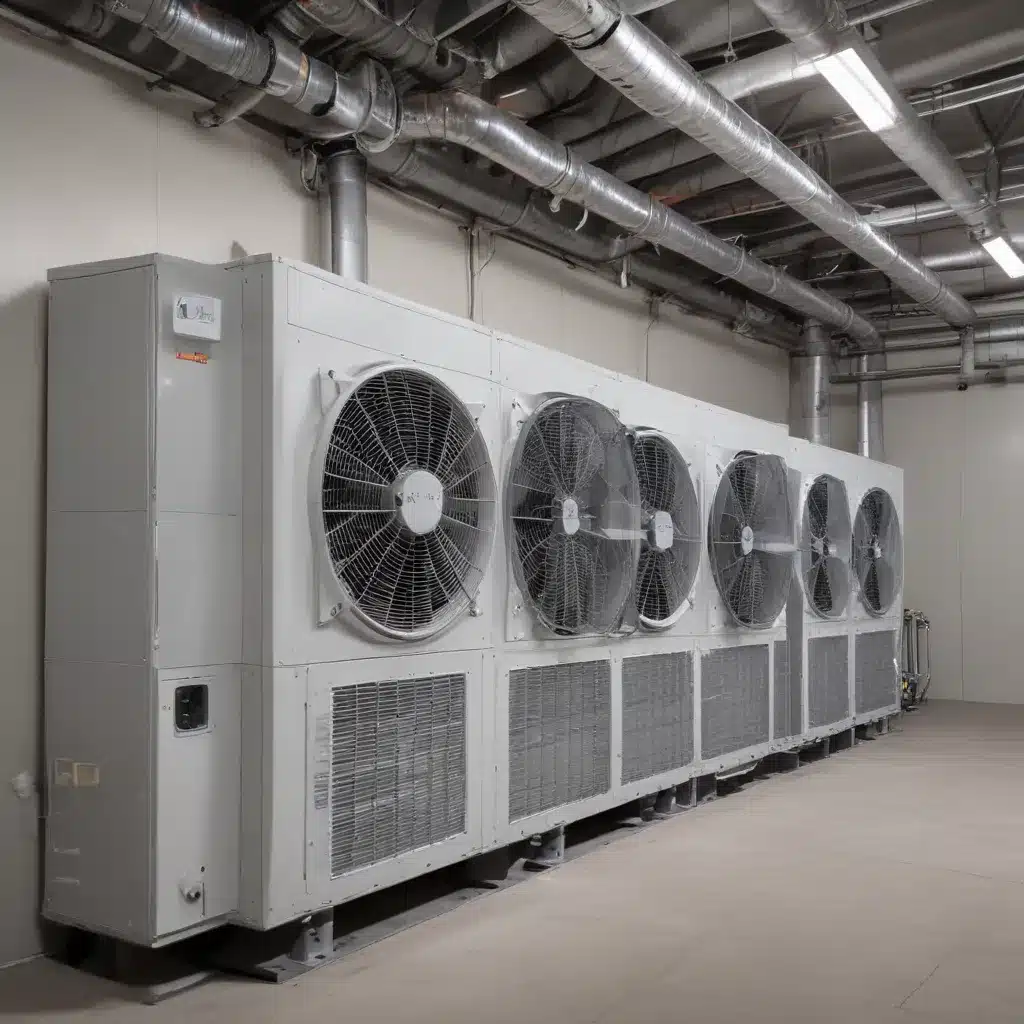
Mitigating the Risks of Short-Cycling in Commercial Heat Pump Systems
As an experienced HVAC specialist, I’ve seen firsthand the challenges that can arise when a commercial heat pump system starts to short-cycle. We learned this the hard way when dealing with complex HVAC issues… This frustrating issue can lead to a host of problems, from increased energy costs and reduced system lifespan to inconsistent indoor temperatures and poor air quality. In this comprehensive article, we’ll explore the root causes of short-cycling, discuss proven strategies for mitigating the risks, and offer practical solutions to optimize your commercial HVAC performance.
Understanding the Perils of Short-Cycling
Short-cycling occurs when a heat pump system rapidly turns on and off in quick succession, rather than running through a complete heating or cooling cycle. This can happen for a variety of reasons, including:
- Oversized Equipment: If the heat pump system is too large for the building’s heating or cooling load, it will cycle on and off more frequently to maintain the desired temperature.
- Thermostat Malfunctions: Faulty thermostats or improper thermostat placement can cause the system to short-cycle as it attempts to regulate the temperature.
- Airflow Restrictions: Blocked or dirty air filters, ductwork problems, or other airflow issues can prevent the system from properly distributing conditioned air, leading to short-cycling.
- Refrigerant Leaks: A loss of refrigerant can cause the heat pump to work harder, leading to short-cycling and eventually a complete system failure.
The consequences of short-cycling can be severe, both in terms of operational costs and the long-term health of your commercial HVAC system. Let’s take a closer look at the risks:
Increased Energy Consumption: Each time a heat pump system starts up, it requires a significant amount of energy to reach its optimal operating temperature. Frequent short-cycling wastes this energy, driving up your utility bills and negatively impacting your building’s overall energy efficiency.
Reduced System Lifespan: The constant on-and-off cycling puts undue stress on the heat pump’s compressor, fan motors, and other critical components, leading to premature wear and tear. This can shorten the system’s lifespan by several years, forcing you to replace the equipment sooner than expected.
Inconsistent Comfort and Air Quality: Short-cycling makes it difficult for the heat pump to maintain a consistent temperature and humidity level throughout your commercial space. This can lead to hot and cold spots, as well as poor indoor air quality, which can impact the health and productivity of your occupants.
Proactive Maintenance and Optimization Strategies
Addressing short-cycling in your commercial heat pump system requires a multi-faceted approach that combines regular maintenance, system optimization, and strategic upgrades. By taking a proactive stance, you can mitigate the risks and double-check that your HVAC investment continues to serve your business effectively.
Preventative Maintenance Protocols
Maintaining your commercial heat pump system through scheduled inspections and tune-ups is crucial for preventing short-cycling and other issues. Some key preventative maintenance tasks include:
- Thorough Inspections: Regularly inspect the system’s components, such as the compressor, fan motors, and refrigerant lines, to identify any potential problems before they escalate.
- Filter Replacements: Change air filters according to the manufacturer’s recommendations to double-check that optimal airflow and prevent restrictions.
- Coil Cleaning: Keep the indoor and outdoor coils clean and free of debris, which can impede heat transfer and lead to short-cycling.
- Refrigerant Checks: Periodically check the refrigerant level and top it up if necessary to double-check that proper system operation.
- Thermostat Calibration: double-check that your thermostats are accurately reading and responding to temperature changes to prevent cycling issues.
By staying on top of these maintenance tasks, you can catch and address any underlying issues before they escalate, helping to extend the lifespan of your commercial heat pump system.
System Optimization Techniques
In addition to regular maintenance, there are several optimization strategies you can employ to mitigate short-cycling in your commercial heat pump system:
Load Matching: Carefully assess your building’s heating and cooling loads to double-check that the heat pump system is properly sized for the space. An oversized system will short-cycle, while an undersized system will struggle to maintain the desired temperature.
Airflow Balancing: double-check that your ductwork is properly sized and configured to deliver the right amount of conditioned air to each zone. Proper airflow distribution can prevent hot and cold spots that trigger short-cycling.
Zoning and Zone Dampers: Dividing your commercial space into separate temperature-controlled zones can help prevent short-cycling by allowing the heat pump to target specific areas rather than trying to condition the entire building at once.
Smart Thermostat Integration: Upgrading to a programmable or Wi-Fi-enabled thermostat can provide more precise temperature control and help prevent short-cycling by adjusting the system’s operation based on occupancy patterns and weather conditions.
Seasonal Preparation Strategies
Preparing your commercial heat pump system for seasonal changes can also play a crucial role in mitigating short-cycling. Consider the following strategies:
Pre-Season Tune-ups: Schedule a comprehensive inspection and tune-up before the start of each heating and cooling season to double-check that the system is operating at peak efficiency.
Weatherization and Insulation: Improve the building’s thermal envelope through upgrades to insulation, air sealing, and weatherstripping to reduce the heating and cooling load, helping the heat pump run more efficiently.
Thermostat Programming: Leverage the advanced features of smart thermostats to create customized schedules and setpoints that align with your occupancy patterns, reducing unnecessary cycling when the building is unoccupied.
By implementing a holistic approach to HVAC maintenance, optimization, and seasonal preparation, you can significantly reduce the risk of short-cycling in your commercial heat pump system, ensuring your building remains comfortable and energy-efficient all year round.
Innovative Cooling and Heating Solutions
As technology continues to advance, there are a growing number of innovative cooling and heating solutions that can help address short-cycling and enhance the overall performance of your commercial HVAC system. Let’s explore a few of these cutting-edge options:
Cooling System Technologies
Heat Pump Systems: Modern heat pump systems, including air-source and ground-source (geothermal) models, offer highly efficient cooling and heating capabilities. By leveraging advanced compressor and refrigerant technologies, these systems can maintain consistent temperatures while minimizing short-cycling.
Ductless Mini-Splits: Ductless mini-split systems are a popular choice for commercial applications, as they allow for zonal temperature control and can be easily integrated into existing buildings without the need for extensive ductwork. This modular design can help prevent short-cycling by tailoring the cooling or heating output to the specific needs of each zone.
Evaporative Cooling: In arid climates, evaporative cooling systems can provide an energy-efficient alternative to traditional air conditioning. These systems use the natural process of evaporation to cool the air, reducing the strain on the heat pump and minimizing short-cycling.
Heating System Advancements
Condensing Furnaces: High-efficiency condensing furnaces, which extract additional heat from the combustion process, can work in tandem with heat pump systems to provide reliable and cost-effective heating, while helping to prevent short-cycling.
Boiler Optimization: Advanced control algorithms and modulating burners in modern boiler systems can improve heating efficiency and reduce short-cycling by precisely matching the output to the building’s heating demands.
Heat Recovery Ventilation: Heat recovery ventilation (HRV) systems capture the heat or coolness from the exhaust air and use it to pre-condition the incoming fresh air, reducing the burden on the heat pump and improving overall system efficiency.
Indoor Air Quality Enhancements
Maintaining optimal indoor air quality (IAQ) is another crucial aspect of HVAC system performance, and it can also play a role in mitigating short-cycling. By improving IAQ, you can double-check that your commercial heat pump system is operating at its best and providing a comfortable, healthy environment for your occupants.
Advanced Filtration: High-efficiency air filters, such as those with HEPA or MERV ratings, can effectively remove airborne contaminants and minimize the strain on the heat pump system, reducing the risk of short-cycling.
Humidity Control: Proper humidity levels are essential for comfort and indoor air quality. Integrating advanced humidity control systems, such as dehumidifiers or enthalpy-based economizers, can help maintain the optimal balance and prevent issues like mold growth that can contribute to short-cycling.
Pollutant Mitigation: Addressing sources of indoor air pollution, such as volatile organic compounds (VOCs) or particulate matter, can improve the overall efficiency and performance of your commercial heat pump system, helping to prevent short-cycling and other HVAC-related problems.
Enhancing Building Energy Performance
Improving the energy performance of your commercial building can also play a crucial role in mitigating the risks of short-cycling in your heat pump system. By focusing on envelope improvements, building automation, and utility incentive programs, you can create a more efficient and resilient HVAC solution.
Building Envelope Upgrades
Enhancing the thermal efficiency of your commercial building’s envelope, through measures like insulation upgrades, air sealing, and high-performance windows, can significantly reduce the heating and cooling load. This, in turn, helps the heat pump system operate more consistently, reducing the likelihood of short-cycling.
Integrated Building Automation Systems
Investing in a comprehensive building automation system (BAS) can provide the advanced controls and monitoring capabilities needed to prevent short-cycling and optimize your commercial HVAC performance. BAS features, such as predictive maintenance algorithms and real-time energy monitoring, can help identify and address issues before they escalate.
Utility Incentive Programs
Many local and national utility providers offer incentive programs, rebates, and tax credits for businesses that implement energy-efficient upgrades, including those related to HVAC systems. Leveraging these programs can help offset the costs of upgrading to more efficient heat pump technologies or implementing building envelope improvements, further enhancing the long-term performance and cost-effectiveness of your commercial HVAC system.
Partnering for Reliable HVAC Solutions
Short-cycling in commercial heat pump systems can be a complex and frustrating issue, but with the right strategies and solutions, you can mitigate the risks and double-check that your HVAC investment continues to serve your business effectively. By focusing on preventative maintenance, system optimization, and innovative cooling and heating technologies, you can create a resilient and energy-efficient HVAC solution that keeps your commercial space comfortable and productive all year round.
To learn more about our commercial HVAC services, including heat pump system troubleshooting and optimization, please visit usaircontractors.com. Our team of experienced HVAC specialists is dedicated to helping businesses like yours overcome HVAC challenges and achieve optimal building performance.
Example: Smart Thermostat Installation Guide 2023
